
Latest News
Paardevlei Nature Reserve named ‘Reserve of the Year’
Paardevlei Nature Reserve has been named the City of Cape Town’s “Reserve of the Year” in recognition of the work done to establish and improve the newly established reserve.
The award was presented during the City’s Biodiversity Management Branch annual awards ceremony that was recently held, which recognises the dedication and work of staff, teams and nature reserve management.
According to Louis van Wyk, the City’s biodiversity area coordinator, Paardevlei is still in the early stages of establishment and has limited resources.
Reserve supervisor David Morris was transferred to the site in January 2026 and has since helped bring together support from the Friends of Paardevlei, the neighbouring Helderberg Nature Reserve team, the Invasive Species Unit and the Conservation Services Unit.
Van Wyk said this collaboration had contributed to progress with fencing, alien vegetation clearing, baseline data collection and community engagement.
Morris said the reserve was honoured to receive the award and pointed to the ecological and cultural significance of Paardevlei.
He said the main vlei is one of Cape Town’s premier birding locations and supports a diversity of birdlife, including 19 species that are of conservation concern.
The reserve also contains remnants of highly threatened lowland vegetation with restoration potential, while its terrestrial areas support wildlife including caracal, large grey mongoose and Cape fox, according to Morris.
Tiffany Schultz, chairperson of the Friends of Paardevlei Wetland, said the group was “absolutely thrilled” that Morris’s work was being recognised by the City.

Cold mornings, dusty roads, birds to count
Across South Africa in July, citizen scientists braved winter mornings and dusty back roads to complete the CAR, CWAC and Crane Census counts. We celebrate their contribution and look forward to sharing the stories and results from another winter of counting birds.
For many of our citizen scientists, the month of July has meant early wake-ups, cold winter mornings and plenty of kilometres along South Africa’s back roads. Whether counting birds from a vehicle along a Coordinated Avifaunal Roadcounts (CAR) route or scanning wetlands during a Coordinated Waterbird Counts (CWAC) census, hundreds of participants once again gave up their time to help us keep track of some of the country’s most important bird populations.
To everyone who took part in the Winter 2026 CAR and CWAC, thank you!
Winter fieldwork is not glamorous. Some teams headed out into decidedly chilly conditions, while others spent their days navigating dusty farm roads, stopping repeatedly to scan distant fields or carefully working their way through flocks of waterbirds. We hope that, despite the cold fingers and dusty vehicles, the birds played their part and provided a few memorable sightings along the way.
Click to read the full article by Cassie Carstens from BirdLife South Africa
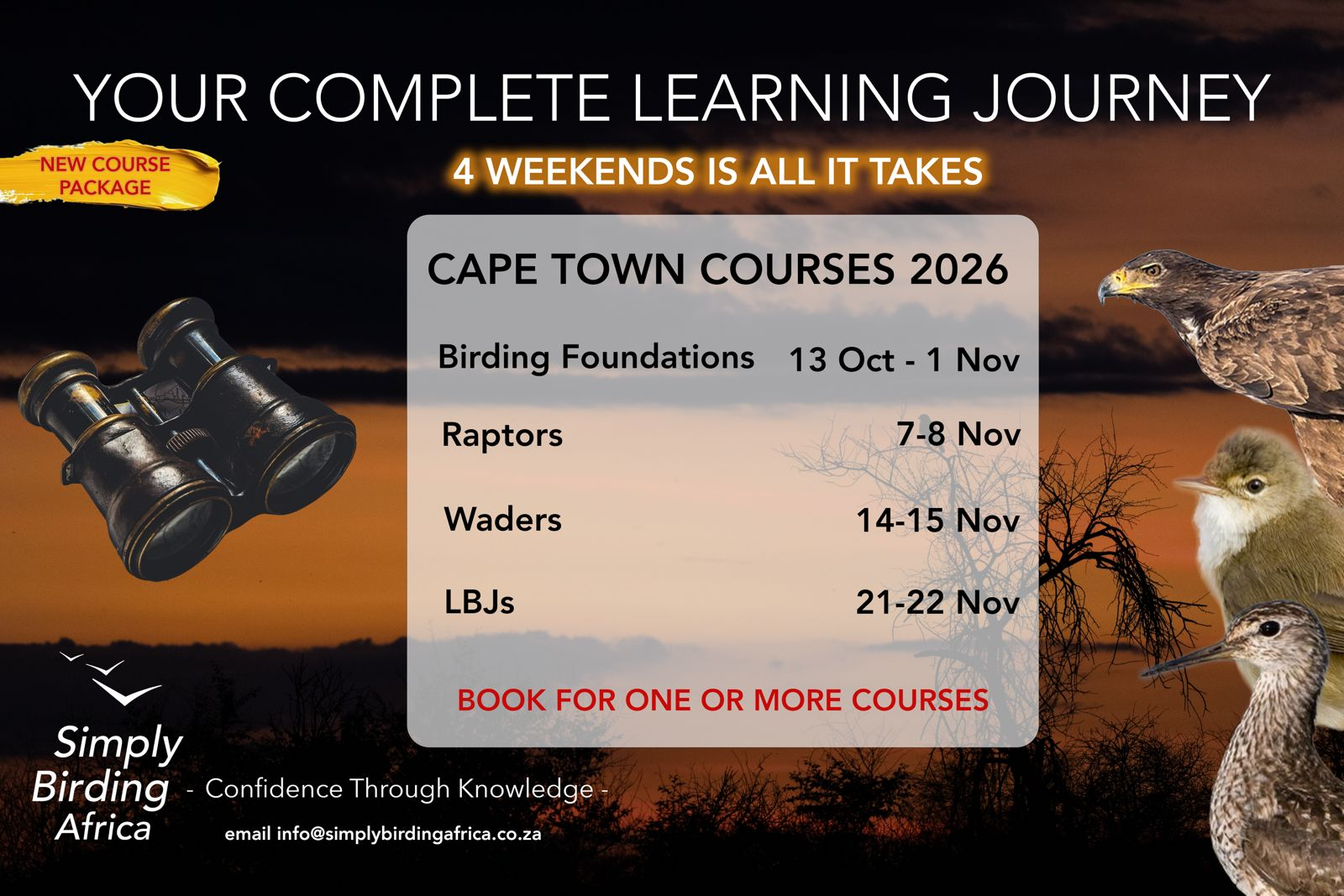
Birding Courses with Doug Newman
Doug Newman is visiting Cape Town to give some courses later in the year. Doug is the author of ‘LBJs made simple’.
See details in the image. The weekend courses are R1,000 each and some include a manual and practical.
Please email Doug if you are interested and more information will be supplied.
Email info@simplybirdingafrica.co.za
Club Weekend Away – October 2026
The committee is planning a weekend stay at Landmeterskop Farm, Stanford for the evenings of 16 and 17 October 2026. Stanford is an excellent birding destination because of the different habitats found in the area.
At time of writing (April 2026), the accommodation is fully booked, however there are many alternative places to stay in the Stanford area, and you can of course still join in the activities.
Weather permitting, and for those members that want to join, we are also planning a birdwatching boat trip on the Saturday morning down the Klein River estuary for two hours. The cost is between R200 and R280 depending on how many people want to go on the boat. Payment on the day of boat trip. A visit to Willem Appel’s dam in Stanford is also planned.
Other good birding destinations are Danger Point Peninsula, Platbos, Papiesvlei Road loop and African Penguin and Seabird Sanctuary, Gansbaai.
Please book your own accommodation in the Stanford area. If you want to join the river boat outing, call or WhatsApp Maresa Volsteedt 083 680 6502 to secure a booking on the riverboat.
Victory for Paardevlei: the City has moved to proclaim it a nature reserve
March 2026
We are celebrating a major milestone for Paardevlei. The City of Cape Town has officially announced its intention to proclaim Paardevlei Nature Reserve.
On 3 March 2026, the City announced that its Mayoral Committee had endorsed a proposal to proclaim two new nature reserves in the Helderberg area, including Paardevlei Nature Reserve, which would cover 75 hectares. The proposal will now go to Council for approval, after which it will move into the next stages of the formal gazetting and public participation process.
This is the first official public notice we have received, and it is a huge moment.
To everyone who signed the petition, shared the cause, spoke up for this special place, and stood with us: thank you. Your support helped show that Paardevlei matters deeply to the community, and that its protection is worth fighting for.
We also want to acknowledge the work being done on the ground by the Friends of Paardevlei committee, together with David Morris, Site Manager at Paardevlei, and the wider community. We have already held our first two invasive plant hack mornings, and the support has been inspiring. It is clear that people do not only want Paardevlei protected in principle — they are also willing to show up and care for it in practice.
Looking ahead, the Friends of Paardevlei committee will be working to formalise Friends Group membership so that community supporters can continue to play an active role in the future of the reserve. In collaboration with the City, site management, and other local organisations such as the Somerset West Bird Club, we hope to support a growing programme of volunteer events, guided walks, educational activities, and habitat restoration initiatives. Over time, we also hope to contribute to thoughtful visitor infrastructure that supports conservation and environmental learning, including possibilities such as bird hides and other low-impact facilities.
This is not the end of the road, but it is a very significant step forward. It means the protection of Paardevlei is now officially on the table, in public, and moving through the formal process.
Read the City of Cape Town’s official announcement here:
If you would like to stay connected and receive future updates from Friends of Paardevlei, you can sign up here:
https://forms.gle/k3m8ABcRXV9Dynyr8
Together, we have helped move Paardevlei closer to the protection it deserves.

Avian Flu update – what to do
March 2026
The coastline of southern Africa has been facing an outbreak of Highly Pathogenic Avian Influenza (HPAI) since July 2025, specifically in the Western Cape and Gqeberha regions and marking this outbreak to be the first since April 2024. The Southern African Foundation for the Conservation of Coastal Birds (SANCCOB) has played a leading role in the response to the outbreak, ensuring that their biosecurity protocols have been reinforced to reduce the risk of the disease spreading to the birds in their care.
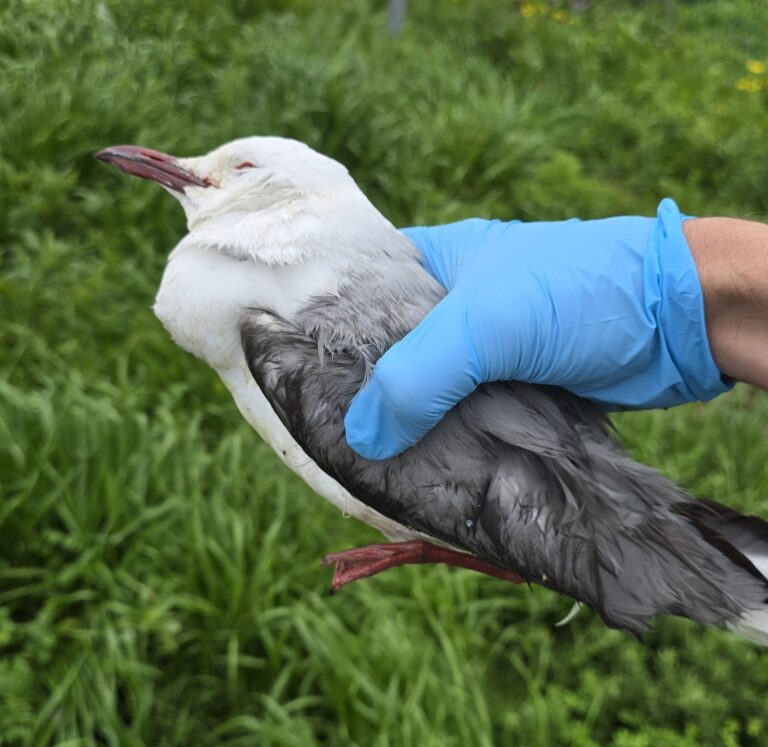
According to the organisation’s observations, Hartlaub’s gulls have been the most affected since August 2025, with cases in Great White Pelicans, Grey-headed Gulls, Kelp Gulls, Whitebreasted Cormorants, Crowned Cormorants and Sacred Ibises being reported as well. Recent reports have also stated that several cases of HPAI have been confirmed in the Critically Endangered African Penguins populations, adding a new pressure this species has to face.
A statement from the SANCCOB organisation, “Our priorities are: keeping our seabird hospitals safe from infection, supporting conservation authorities with wild responder efforts, monitoring the impact on wild birds, and ensuring good animal welfare. Our actions include surveillance, working with State Veterinary Services and conservation authorities to monitor and manage the disease, advising on response procedures, educating rehabilitation centres, veterinarians, and first responders, and arranging humane euthanasia for birds showing clinical signs.”
SANCCOB’s Cape Town and Gqeberha rehabilitation centres have stated that while the centres remain operational, the implementation of these measures include quarantine and HPAI testing for all incoming seabirds, strict disinfection and sanitation protocols, as well as controlled movement of staff, volunteers, and visitors. They remain determined to protecting seabirds and to the limiting of the spread of this disease across the coastal lines.
Should one come across a possible case of this disease, please see as follows.
How can I tell if a bird has HPAI?
HPAI can only be confirmed through a laboratory (PCR) test. At this time, any bird displaying any of the following signs should be considered a suspected case of HPAI.
- Unusual behaviour or tameness
- Twitches, tremors or seizures
- Cloudy eyes
- Inability to walk or fly away
What to do if you find an affected bird
If you encounter a sick or dead wild bird:
- Do not touch, feed, or attempt to rescue it.
- Keep at least one metre away.
- Record the exact location, time, and species (if known).
- Take a photo or video if possible.
Report immediately to:
- SANCCOB (seabirds): 021 557 6155 (Cape Town) / 078 638 3731 (WhatsApp) / 041 583 1830 (Gqeberha)
- DFFE OCIMS Reporting Tool (other birds): National OCIMS
Your report helps authorities track and respond to the outbreak in real time.
What to do to protect your pets and family
- Keep dogs on leashes near beaches and coastal areas.
- Keep pets and domestic birds away from wild birds and their droppings.
- Wash hands and shoes thoroughly after contact with wild birds.
- If you develop flu-like symptoms after possible exposure, seek medical advice and mention contact with a sick or dead bird.
What if I have touched a sick or dead bird?
- Wash hands with soap and warm water or use an alcohol-based sanitiser.
- Remove droppings or fluids using disposable paper towels and seal them in a plastic bag.
- Disinfect any surfaces with a diluted bleach solution (120 ml bleach per litre of water).
- Wash exposed clothing and dry it in sunlight or a tumble dryer before re-wearing.
- Avoid contact with other birds until you’ve cleaned and changed.
How can I help?
You can help limit the spread of HPAI by:
- Reporting sick or dead seabirds immediately.
- Sharing verified updates from SANCCOB and DFFE.
- Encouraging others not to touch or interfere with wild birds.
Supporting SANCCOB financially or with equipment donations
Public support fuels SANCCOB’s mission to rescue, rehabilitate, and conserve vulnerable and protected Seabirds.
Support by:
- Donating: www.sanccob.co.za/donate
- Contributing equipment: latex gloves, F10 or bleach disinfectant.
- Adopting a Penguin
- Volunteering at SANCCOB’s Cape Town or Gqeberha centres.
By Faye Knight: African Birdlife Magazine
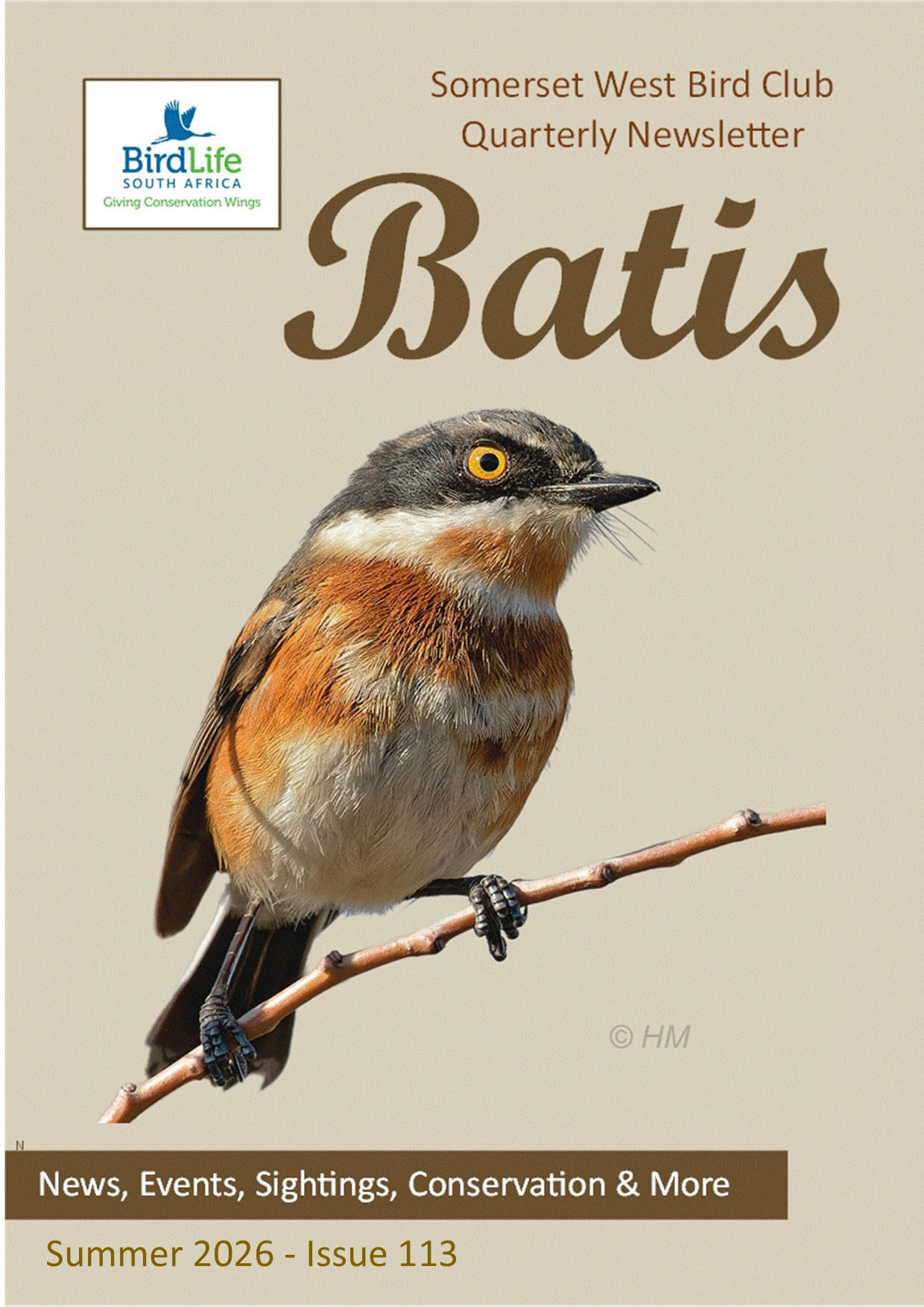
Batis Cover Competition – we have a winner!
February 2026
Congratulations to Herman Meyer who supplied the winning artwork for the refeshed cover of the Batis, our quarterly magazine.
The cover debuted on the latest Batis edition this month and everyone at the meeting this month seemed to love it. Thank you to everyone who submitted photos and drawings. They will all be featured inside the Batis this year.
Schapenberg – a new nature reserve for Somerset West
October 2025
A New Era for Fynbos and Feathered Friends
On 19 September 2025 Schapenberg Nature Reserve officially opened its gates, a welcome development for conservationists, hikers and birdwatchers alike. The reserve, which is still in the process of getting formally proclaimed, offers an opportunity to secure habitat that was previously under a patchwork of private ownership, informal protection and occasional threats. Here’s what we know so far, what to expect, and why birders should be excited.
While the Schapenberg Nature Reserve is relatively small, it neighbours the 40ha private Boskloof Conservation area. There is also huge potential to link the site to Vergelegen’s Nature Reserve and the Hottentots Hollands Mountains via Morgenster Estate, which also has very important remaining natural areas.
The terrain includes granite foothills of the Hottentots Holland Mountains, gently sloping down toward Sir Lowry’s Pass. Schapenberg Nature Reserve itself contains 14 hectares of Critically Endangered Swartland Shale Renosterveld and the neighbouring Boskloof Estate also contains endangered Boland Granite Fynbos with a tremendous diversity of plant species. The soils are ancient, and the water catchment functions of these hills are vital to downstream ecosystems. Schapenberg forms part of the watershed feeding the Sir Lowry’s River system.
The habitat mix in Schapenberg Nature Reserve offers interesting birding opportunities. Though comprehensive checklists are still being assembled since the opening, existing observations and habitat suggest a number of probable and potential species, some of them special.
Likely Residents and Regulars:
- Sunbirds are almost a sure bet: Orange-breasted, Malachite, and Southern Double-collared in flowering fynbos.
- Birds often encountered there include Grey-backed Cisticola, Fiscal Flycatcher, Cape Canary. Fiery-necked Nightjars are also often flushed. Cape Sugarbirds are attracted by the Proteas, wherever they are in good numbers.
- Typical fynbos passerines are Cape Batis, Cape Bulbul, Speckled Mousebird, Yellow Bishop.
- The site is really well positioned to view soaring raptors, and swifts and swallows.
Rocky Ridges & Higher Ground:
- Where the granite ridges are exposed and rugged, species such as Cape Siskin, or even Sentinel Rock Thrush might establish territories.
- Raptors to look out for: Jackal Buzzard, Booted Eagle, perhaps Verreaux’s Eagle or other eagles in occasional soaring flights.
Why This Reserve Matters
The formal reserve status and appropriate management provides tools to address several longstanding issues:
- Alien plant removal and fire management can now be more effectively planned and enforced, crucial for fynbos health and for reducing risk of wildfires.
- Catchment protection: protecting the slopes of the Sir Lowry’s River catchment helps maintain water flow, water quality, and downstream biodiversity.
- Connectivity: As part of a network of protected lands in the region (including Hottentots Holland, Helderberg slopes, etc.), Schapenberg fills important gaps, especially for species with restricted ranges or limited dispersal.
- Public access & citizen science: The reserve opening makes it easier to organise walks, atlas surveys and volunteer programmes. Birders can contribute data that will help build a clearer species list for the area.
Things to Keep in Mind, and How We Can Help
- Access may still be in phases: trails, signage, parking and entry points may not all be fully functional yet. Keep an eye on announcements and use established paths.
- Watching quietly helps: many fynbos bird species are shy; early mornings and calm weather often yield the best sightings.
- Record what you see: even “common” birds that may not yet figure in formal lists are important. Your observations will help shape the reserve’s avifaunal baseline.
- Please log any sightings on the wonderful citizen science platform, iNaturalist. Please join the Schapenberg Nature Reserve project. You can view the 222 species already logged at: Observations – iNaturalist
- Support restoration efforts: volunteer alien clearing, habitat restoration, watercourse rehabilitation. These activities are likely to need community involvement and funding.
For the Somerset West Bird Club, the opening of Schapenberg Nature Reserve is a moment to both explore new terrain and deepen our commitment to protecting fynbos-dependent birdlife. I look forward to seeing the first official bird list, to walking new trails, and to sharing sightings at our meetings.
Thanks to Cliff Dorse for assistance with this article.

SWBC Donations 2025
September 2025
At our August meeting, SWBC Chair Wilene announced that the club Committe had agreed to use funds to make donations to:
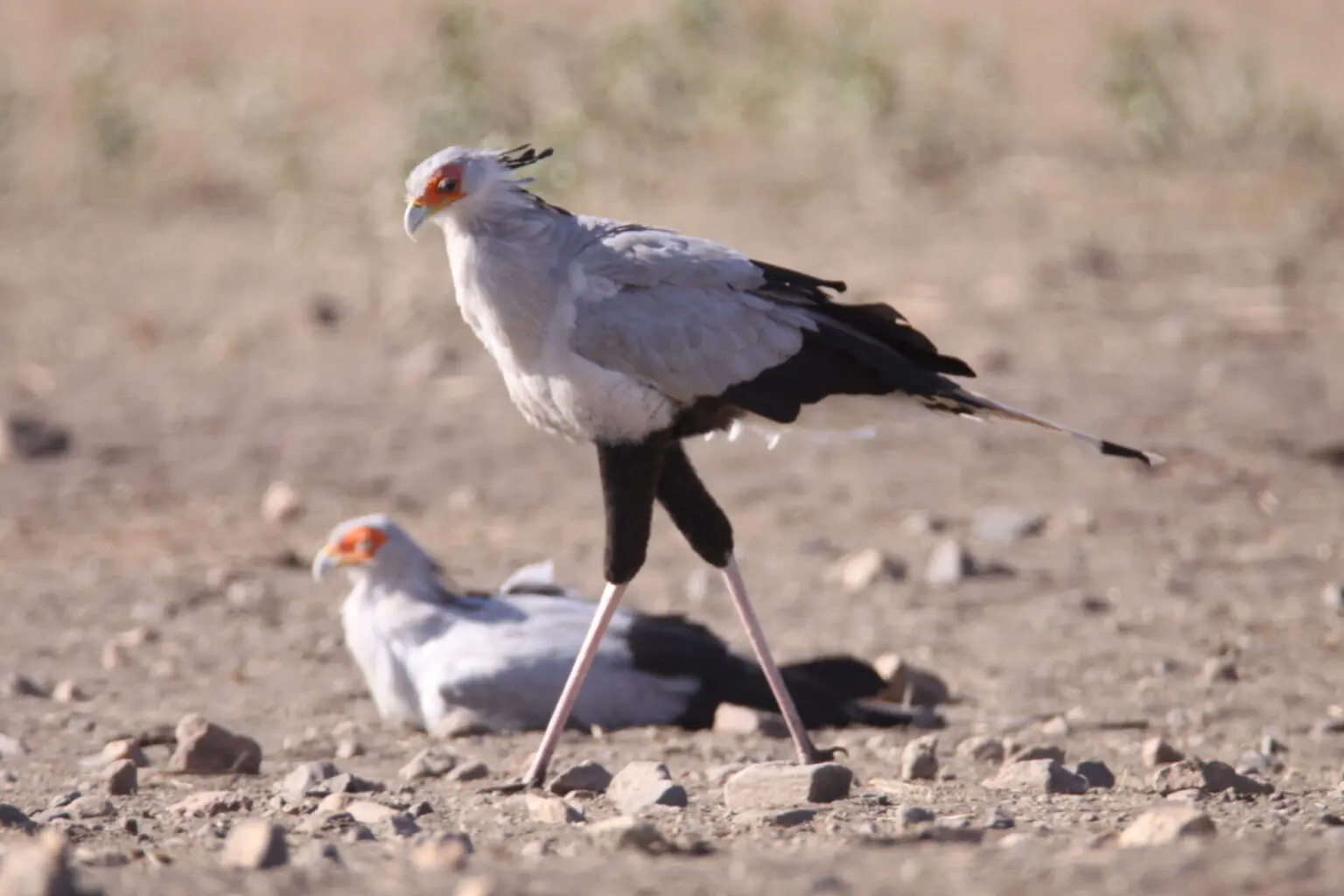
- Secretary Bird tracking project (none are currently being tracked in the Western Cape)
- Eco schools, to take a school group to Helderberg Nature Reserve by bus
- FitzPatrick Institute of African Ornithology to support the CAR count and BirdLasser
In memory of Anton Odendal
3 July 2025
It is with deep sadness that we share the passing of Anton, late last night — a much-loved member of BirdLife Overberg and the wider birding community. He was a passionate birder, a dedicated mentor, and a true friend to us all.
Anton’s knowledge, warmth, and generosity touched the lives of many. We will miss him dearly and remember him every time we go out birding.
Our heartfelt condolences go out to Elaine and the family.
De Hoop Penguin colony is growing
May 2025
On Sunday, 25 May, 28 young African Penguins took their first swim in the ocean at what will hopefully become their future home—the newly established colony at De Hoop Nature Reserve.
Working in collaboration with SANCCOB and CapeNature, BirdLife South Africa’s Christina Hagen and Philip Faure released the hand-reared birds at the site. To help them acclimatise and imprint on the area, the penguins were kept overnight in a beach pen before being released the following day. It is hoped that this early exposure will encourage them to return to breed in four to six years.
For the next few years, the penguins will live almost entirely at sea, coming ashore only to moult. Each bird has been fitted with a small RFID microchip beneath the skin on its leg, allowing us to track their movements and monitor survival if they pass over scanners at De Hoop or other breeding colonies.
We’re grateful for your support as we work to secure a future for South Africa’s penguins.
Shireen Gould, Membership Manager & Tarryn McKechnie, Philanthropy Officer – BirdLife South Africa
Photo credits: Christina Hagen

New cameras installed at De Hoop Penguin Colony
March 2025
As reported below, the club made a donation to the De Hoop Penguin Colony in 2024. Christina Hagen has let us know that some of the donation was used to install new cameras last December. She passes on her thanks again for the generous donation.


Black Harrier Update from Overberg Renosterveld Trust
January 2025
The Club made a donation to the conservation efforts of Black Harriers by the Overberg Renosterveld Organisation about two years ago. We received an update from them in December 2024.
In this detailed newsletter you can learn more about how the Harriers are tagged and what has been learnt about the individual birds.

SWBC Donation to De Hoop Penguin Colony
October 2024
We are very pleased to announce that Somerset West Bird Club has made a donation of R5,000 to The De Hoop Penguin Colony. Christina Hagen, who is the Pamela Isdell Fellow of Penguin Conservation at BirdLife South Africa, accepted the cheque from our Chair Willene. Christina spoke to the Club in August this year about the challenges the colony is facing.
The donation will be used to purchase an NVR (Network Video Recorder) to record footage from CCTV cameras in the reserve. Christina is busy buying more cameras to allow more monitoring, and the NVR is a vital piece of equipment to store and process the video footage.
Christina passes on her thanks to the club and the committee for the donation.
